Buy fachgeschaeft.eu ?
We are moving the project
fachgeschaeft.eu .
Are you interested in purchasing the domain
fachgeschaeft.eu ?
domain@kv-gmbh.de · 0541-91531010
Buy fachgeschaeft.eu ?
What are conjunctional clauses, relative clauses, demonstrative clauses, and infinitive clauses?
Conjunctional clauses are dependent clauses that are introduced by a conjunction, such as "because," "although," or "while." They provide additional information about the main clause in a sentence. Relative clauses are also dependent clauses that provide more information about a noun in the main clause. They are introduced by relative pronouns like "who," "which," or "that." Demonstrative clauses are dependent clauses that function as adjectives and provide more information about a noun in the main clause. They are introduced by demonstrative pronouns like "this," "that," "these," or "those." Infinitive clauses are dependent clauses that are formed with an infinitive verb (to + base form of the verb). They can function as nouns, adjectives, or adverbs in a sentence. **
Are conjunctive clauses always adverbial clauses?
No, conjunctive clauses are not always adverbial clauses. While adverbial clauses are a type of conjunctive clause that function as adverbs to modify verbs, adjectives, or other adverbs, there are also other types of conjunctive clauses. For example, there are conjunctive clauses that function as noun clauses, such as in "I know that you are busy." In this sentence, "that you are busy" is a conjunctive clause functioning as a noun clause, not an adverbial clause. Therefore, conjunctive clauses can serve various grammatical functions beyond just adverbial clauses. **


Similar search terms for Clauses
Top-Angebote
Products related to Clauses:
-
Value Selection Run Panel Retail Store Display Garage Tool Organizer Run Panel Retail Store Display Garage Tool OrganizerTransform your cluttered workspace into a model of sleek efficiency with a wall mounting display solution that inspires total peace of mind. This heavyduty slatwall panel is expertly crafted for professionals, boutique owners, and homeowners...209,97 $*Shipping: 0,00 $Secure redirect to the provider
-
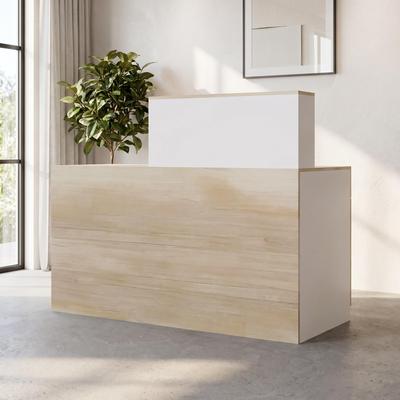
Timechee Retail Reception Counter Desk with Locking Drawer & Cabinet, 55” Checkout Counter for Store, Salon, Coffee Shop, Front DeskThis stylish reception counter desk is designed to enhance both functionality and aesthetics in commercial spaces. The warm white and oak wood grain finish delivers a welcoming and modern appearance.216,99 $*Shipping: 0,00 $Secure redirect to the provider
-
1Easylife Large Reception Desk Front Desk with LED Lights for Salon Reception Room Store Office Lobby Retail Shop ClinicThis reception desk is perfect for any business or office looking to make a strong first impression. The large desk features LED lighting that adds a modern touch to your reception area.229,59 $*Shipping: 0,00 $Secure redirect to the provider



-
What are relative clauses and conjunctional clauses?
Relative clauses are clauses that provide additional information about a noun in the main clause. They are introduced by relative pronouns such as "who," "which," "that," and "whom." For example, in the sentence "The book that I read is very interesting," the relative clause "that I read" provides more information about the noun "book." Conjunctional clauses, on the other hand, are clauses that are connected to the main clause by conjunctions such as "and," "but," "or," "if," and "because." They can express relationships such as addition, contrast, alternative, condition, and cause. For example, in the sentence "I will go to the park if the weather is nice," the conjunctional clause "if the weather is nice" expresses a condition for the action in the main clause. **
-
What are the French conditional clauses (si-clauses)?
French conditional clauses, also known as si-clauses, are used to express a hypothetical situation and its potential outcome. They consist of two parts: the si clause (if clause), which describes the condition, and the main clause, which describes the potential result. The si clause is typically formed using the conjunction "si" followed by the imperfect tense or the pluperfect tense, while the main clause is formed using the conditional tense. These clauses are commonly used to talk about what would happen in certain situations if a specific condition were met. **
-
What is the difference between a specialty store and a specialty shop, a supermarket and a consumer market?
A specialty store typically refers to a retail store that focuses on selling a specific type of product or serving a particular niche market, such as a store that only sells electronics or sports equipment. On the other hand, a specialty shop is a smaller, more specialized retail establishment that may offer unique or handcrafted items, often with a focus on a specific theme or style. A supermarket is a large self-service grocery store that offers a wide variety of food and household products, often organized into different departments like produce, meat, and bakery. In contrast, a consumer market refers to the overall marketplace where goods and services are bought and sold by consumers, encompassing a wide range of products beyond just groceries, such as clothing, electronics, and personal care items. **
-
How can adverbial clauses be used as subordinate clauses?
Adverbial clauses can be used as subordinate clauses to provide additional information about the main clause. They can modify the verb in the main clause by expressing time, place, manner, condition, reason, purpose, or concession. For example, in the sentence "She went to bed after she finished her homework," the adverbial clause "after she finished her homework" provides information about the timing of the main action "She went to bed." Adverbial clauses are introduced by subordinating conjunctions such as after, before, while, since, because, if, although, etc. **


How can subordinate clauses be rewritten as main clauses?
Subordinate clauses can be rewritten as main clauses by removing the subordinating conjunction and making any necessary adjustments to the verb tense or word order. For example, the subordinate clause "because she was tired" can be rewritten as the main clause "she was tired." This transformation allows the subordinate clause to stand alone as a complete sentence. Additionally, any pronouns or other words that were dependent on the subordinating conjunction may need to be adjusted to ensure the new main clause is grammatically correct. **
How can one recognize main clauses and subordinate clauses?
Main clauses can stand alone as complete sentences, while subordinate clauses cannot. Subordinate clauses often begin with subordinating conjunctions such as "although," "because," "if," "when," or "while." They also often contain a subject and a verb, but they do not express a complete thought on their own. Main clauses, on the other hand, express a complete thought and can function as independent sentences. By identifying these characteristics, one can recognize main and subordinate clauses in a sentence. **
Top-Angebote
Products related to Clauses:
-
Enesco/Dept 56 More Letters for the Clauses Clothtique Red , RedEvery year, Mr. and Mrs. Claus are eager to receive and read More Letters for the Clauses. The red mailbox has holiday accents including holly leaves, red berries, and a red bow; it is filled with wrapped packages and rolled-up letters. This happy...149,99 $*Shipping: 20,95 $Secure redirect to the provider
-
Enesco/Dept 56 More Letters for the Clauses African American Clothtique Red , RedEvery year, Mr. and Mrs. Claus are eager to receive and read More Letters for the Clauses. The red mailbox has holiday accents including holly leaves, red berries, and a red bow; it is filled with wrapped packages and rolled-up letters. This happy,...149,99 $*Shipping: 20,95 $Secure redirect to the provider
-
Value Selection Run Panel Retail Store Display Garage Tool Organizer Run Panel Retail Store Display Garage Tool OrganizerTransform your cluttered workspace into a model of sleek efficiency with a wall mounting display solution that inspires total peace of mind. This heavyduty slatwall panel is expertly crafted for professionals, boutique owners, and homeowners...209,97 $*Shipping: 0,00 $Secure redirect to the provider
-
What are conjunctional clauses, relative clauses, demonstrative clauses, and infinitive clauses?
Conjunctional clauses are dependent clauses that are introduced by a conjunction, such as "because," "although," or "while." They provide additional information about the main clause in a sentence. Relative clauses are also dependent clauses that provide more information about a noun in the main clause. They are introduced by relative pronouns like "who," "which," or "that." Demonstrative clauses are dependent clauses that function as adjectives and provide more information about a noun in the main clause. They are introduced by demonstrative pronouns like "this," "that," "these," or "those." Infinitive clauses are dependent clauses that are formed with an infinitive verb (to + base form of the verb). They can function as nouns, adjectives, or adverbs in a sentence. **
-
Are conjunctive clauses always adverbial clauses?
No, conjunctive clauses are not always adverbial clauses. While adverbial clauses are a type of conjunctive clause that function as adverbs to modify verbs, adjectives, or other adverbs, there are also other types of conjunctive clauses. For example, there are conjunctive clauses that function as noun clauses, such as in "I know that you are busy." In this sentence, "that you are busy" is a conjunctive clause functioning as a noun clause, not an adverbial clause. Therefore, conjunctive clauses can serve various grammatical functions beyond just adverbial clauses. **
-
What are relative clauses and conjunctional clauses?
Relative clauses are clauses that provide additional information about a noun in the main clause. They are introduced by relative pronouns such as "who," "which," "that," and "whom." For example, in the sentence "The book that I read is very interesting," the relative clause "that I read" provides more information about the noun "book." Conjunctional clauses, on the other hand, are clauses that are connected to the main clause by conjunctions such as "and," "but," "or," "if," and "because." They can express relationships such as addition, contrast, alternative, condition, and cause. For example, in the sentence "I will go to the park if the weather is nice," the conjunctional clause "if the weather is nice" expresses a condition for the action in the main clause. **
-
What are the French conditional clauses (si-clauses)?
French conditional clauses, also known as si-clauses, are used to express a hypothetical situation and its potential outcome. They consist of two parts: the si clause (if clause), which describes the condition, and the main clause, which describes the potential result. The si clause is typically formed using the conjunction "si" followed by the imperfect tense or the pluperfect tense, while the main clause is formed using the conditional tense. These clauses are commonly used to talk about what would happen in certain situations if a specific condition were met. **
Similar search terms for Clauses
-
Timechee Retail Reception Counter Desk with Locking Drawer & Cabinet, 55” Checkout Counter for Store, Salon, Coffee Shop, Front DeskThis stylish reception counter desk is designed to enhance both functionality and aesthetics in commercial spaces. The warm white and oak wood grain finish delivers a welcoming and modern appearance.216,99 $*Shipping: 0,00 $Secure redirect to the provider
-
1Easylife Large Reception Desk Front Desk with LED Lights for Salon Reception Room Store Office Lobby Retail Shop ClinicThis reception desk is perfect for any business or office looking to make a strong first impression. The large desk features LED lighting that adds a modern touch to your reception area.229,59 $*Shipping: 0,00 $Secure redirect to the provider
-
1Easylife 63 Inch LED Reception Front Counter Desk Table with Private Panels for Check Out Retail,Store Office Lobby Shop ClinicUpgrade your reception area with this modern and functional reception desk. With LED lighting and privacy baffle, this reception desk offers a unique and stylish solution to meet your business needs.239,99 $*Shipping: 0,00 $Secure redirect to the provider
-
Inspired Finds Retro Navy 3 Pack Fashion Gift Packaging Paper Bags For Boutique & Retail mElevate your retail presentation or giftgiving with this set of retro navy gift packaging bags that blend timeless style with practical durability. Designed for boutiques, clothing stores, jewelry shops, and fashion brands, these fashionable paper...34,99 $*Shipping: 0,00 $Secure redirect to the provider
-
What is the difference between a specialty store and a specialty shop, a supermarket and a consumer market?
A specialty store typically refers to a retail store that focuses on selling a specific type of product or serving a particular niche market, such as a store that only sells electronics or sports equipment. On the other hand, a specialty shop is a smaller, more specialized retail establishment that may offer unique or handcrafted items, often with a focus on a specific theme or style. A supermarket is a large self-service grocery store that offers a wide variety of food and household products, often organized into different departments like produce, meat, and bakery. In contrast, a consumer market refers to the overall marketplace where goods and services are bought and sold by consumers, encompassing a wide range of products beyond just groceries, such as clothing, electronics, and personal care items. **
-
How can adverbial clauses be used as subordinate clauses?
Adverbial clauses can be used as subordinate clauses to provide additional information about the main clause. They can modify the verb in the main clause by expressing time, place, manner, condition, reason, purpose, or concession. For example, in the sentence "She went to bed after she finished her homework," the adverbial clause "after she finished her homework" provides information about the timing of the main action "She went to bed." Adverbial clauses are introduced by subordinating conjunctions such as after, before, while, since, because, if, although, etc. **
-
How can subordinate clauses be rewritten as main clauses?
Subordinate clauses can be rewritten as main clauses by removing the subordinating conjunction and making any necessary adjustments to the verb tense or word order. For example, the subordinate clause "because she was tired" can be rewritten as the main clause "she was tired." This transformation allows the subordinate clause to stand alone as a complete sentence. Additionally, any pronouns or other words that were dependent on the subordinating conjunction may need to be adjusted to ensure the new main clause is grammatically correct. **
-
How can one recognize main clauses and subordinate clauses?
Main clauses can stand alone as complete sentences, while subordinate clauses cannot. Subordinate clauses often begin with subordinating conjunctions such as "although," "because," "if," "when," or "while." They also often contain a subject and a verb, but they do not express a complete thought on their own. Main clauses, on the other hand, express a complete thought and can function as independent sentences. By identifying these characteristics, one can recognize main and subordinate clauses in a sentence. **
* All prices are inclusive of VAT and, if applicable, plus shipping costs. The offer information is based on the details provided by the respective shop and is updated through automated processes. Real-time updates do not occur, so deviations can occur in individual cases. ** Note: Parts of this content were created by AI.